
From CAD $9,350
Guarantee
Small Group
Unknown
Rating
Experience Overview
Discover Mexico, where jungle temples and abandoned cities make way to colonial towns. This fusion of history has led to a unique culture, encompassing the art of Frida Kahlo and the delicious cuisine of Oaxaca. See it all on a journey from Mexico City to Chichén Itzá, one of the New Wonders of the World. This extra-special adventure, which is one day longer than the standard trip, spends a day celebrating the Day of the Dead, witnessing the traditions and visiting the Chamulan village of Romerillo for an authentic experience of the festivities.
Itinerary also available for Day of the Dead in Oaxaca or Discover Mexico.
Trip For You
This trip is rated Activity Level 2 (Easy & Moderate). For more on our trip gradings, visit our Activity Level Guidelines page.
Journeys: Covering a lot of ground from Mexico City to Cancún does mean there are some long drives, some of which are on winding mountain roads. Many of the drives take between two and six hours, with a maximum drive time of approximately eight hours.
Climate: Some of the trip, in the lowlands of Chiapas and the Yucatan in particular, is likely to be hot and humid, especially in summer (drinking plenty of water and dressing in loose cotton clothing will help).
Fitness: Walking city tours and visits to various pre-Hispanic sites mean a fair amount of time on our feet. Many of the areas visited are at high altitude and some short walks (normally one to three hours) are planned. A reasonable level of fitness is recommended.
Swimming: This trip includes a water-based excursion on the Xochimilco canals, where local safety standards may differ from those you are used to. There are unlikely to be personal flotation devices (ie lifejackets or buoyancy aids) available for you to use. If you cannot swim, you should not take part in this activity/excursion. If you are concerned about taking part in this activity, please discuss with your tour leader at the start of the trip so they can make alternative arrangements.
Eating Drinking
Breakfast generally consists of fruits, cereals, beans and eggs.
For meals not included, budget around 255-340 Mexican pesos (US$15-US$20) for lunch and 255-510 pesos (US$15-US$30) for dinner. A beer costs about 70 pesos (US$4).
There is a lot more to Mexican cuisine than tacos and tortillas and we can discover the wealth of dishes on offer.
In Oaxaca, we attend a cooking class, the exact dishes we learn to cook can vary but generally include tortillas, salsas, mole (chocolate-based savoury dishes) and guacamole. We also learn about Mexican drinks, visiting a mezcal distillery.
Note: Drinking water is provided on the bus from large containers to minimise the amount of single-use plastic bottles used; please bring a refillable bottle with you.
Transportation
Transport during this trip is by private minibuses (usually with air conditioning) and boat.
Joining Instructions
Key information
Recommended arrival time: You can arrive at any time today. There will be a welcome briefing on the morning of Day 2.
Airport: Aeropuerto Internacional Benito Juárez, Mexico City (MEX)
Getting to the start hotel
The start hotel is approximately 50 minutes’ drive from the airport. We provide one group arrival transfer from the airport, which is timed to coincide with the arrival of a chosen flight. You may join this transfer at no extra cost, provided you can be at the airport before the transfer leaves. Speak to your sales representative for the group arrival transfer times or to arrange a private transfer.
If you would like further information on joining this trip, please speak to your sales representative.
Catching your return flight
On the last day of the tour there’s one group transfer to Cancun airport, where this tour ends. This group transfer is scheduled to align with a chosen flight; therefore, you should not book flights leaving before then. Please speak to your sales representative for the timings of this flight as it can change. If you want to stay in Cancun please speak to your sales representative who can organise a private transfer from Cancun Airport to any post-tour accommodation.
Departure tax for international visitors
The state of Quintana Roo charges all international travellers a departure tax. This tax is approximately US$21 per person. The fee can be paid and a receipt obtained by visiting www.visitax.gob.mx/sitio prior to arrival or during the visit. The payment must be verified prior to leaving Quintana Roo. Once travellers have concluded their stay in Quintana Roo, they must show their receipt at the airport checkpoint before boarding. Travellers who do not have a receipt will receive assistance to make the payment at that time.
Weather Information
There is little variation in temperature between seasons on the coast and in the lowland areas. Expect 28C-33C (82F-91F) average daytime maximum and 18C-23C (64F-73F) nighttime minimum. On the coast, the heat and humidity are moderated by sea breezes, but inland it is likely to be quite humid.
In the hills, the temperatures are moderated by the altitude, and there is more seasonal variation. Between November and February, the daytime maximum is around 20C (68F), rising to 27C (81F) in summer. Nights are much cooler, around 6C (43F) in winter and 12C (54F) in summer. Please note, it can be surprisingly cold in the highlands on winter nights.
The wet season is from June to October, when it normally rains on average one day in three. The rains tend to be short and heavy, alternating with pleasant clear spells. During the other months, rain is much less likely, but there is the chance of an occasional storm at almost any time.
Spending Money
It is possible to pay for some items in US dollars, including some souvenirs, though in normal shops you need to use Mexican pesos. We recommend you carry some small change for incidentals.
Optional excursions (prices subject to change)
Optional activities should be paid in Mexican pesos directly to the tour leader and must be ordered by Day 3.
Oaxaca
— Visit Alebrijes workshop afternoon: US$18 (paid locally, for two or more people)
San Cristobal
— Visit to Chamula and Zinacantan: US$18 (paid locally, for two or more people).
Tipping
Although entirely optional, we suggest you budget for the following tips:
Approximately 1,045 pesos (US$65) for your tour leaderApproximately 610 pesos (US$32) for your driverApproximately 100 pesos (US$6) for each local guide usedAround 10%-15% for restaurant meals
Highlights
See the Day of the Dead festivities in Romerillo — Tour the magnificent historic centre of Mexico City — Explore Chichén Itzá, one of the New Seven Wonders of the World — Embark on an immersive cookery course in Oaxaca — Enjoy a relaxing ride on the canals of Xochimilco
Trip Details
 Product Code: 4165
 Tour Type: Small Group
 Accommodation: Moderate
 Transport: and boat.
 Guide Language: English
Travel Styles:
Budget
Supplier Code: AMXR
 Starts:
 Finishes:
 Duration: 16 days
 Departures: Guaranteed
 Physical rating:
Unknown
Physical rating:
Unknown
Includes
All accommodation: 15 Comfort nights (hotels) — All breakfasts, five lunches, one dinner — Immersive itinerary with all transport (private minibus and boat) and listed activities — Expert tour leader to enhance your adventure — Group arrival and departure transfers availableAccommodation
Historic and modern hotelsStaying in a mix of colonial and modern properties, we discover the wide variety of accommodation styles available in Mexico. Typically, these are of a three-star standard and, when we are based in cities, within the historic centres. Listed below are some of the standout properties we usually use on this trip. Puebla: Hotel Colonial Puebla (night 4) Just one block from the zócalo (main square), Hotel Colonial is a historic building dating to 1668. Originally constructed by Jesuits, it hosted travellers as early as the 18th century. Nowadays, its restaurant is particularly renowned – try the mole poblano, a chilli and chocolate sauce that comes from Puebla. San Cristóbal: Hotel Diego de Mazariegos (nights 9-11) In the historic centre of San Cristóbal, Hotel Diego Mazariegos is within walking distance of the main square and cathedral. The tranquil courtyard, two restaurants and pub provide ample opportunities to relax and refuel after a busy day exploring. Palenque: Hotel La Aldea del Halach Huinic (night 12) Set in tropical gardens on the outskirts of Palenque National Park, La Aldea del Halach Huinic provides a tranquil place to stay. It has been designed to blend with its natural surroundings and reduce its environmental impact. The outdoor pool is a focal point of the property, and all rooms come with a balcony and hammock overlooking the gardens. Keep your eyes peeled for monkeys and toucans! Worth knowing Tailor your trip: Extend your adventure by securing extra hotel nights before or after the main itinerary. Speak to your sales representative to book.Private rooms: Like most tour operators, we pair solo passengers together in a room. If you’d prefer to have a private room, it’s normally possible to do this for a supplement. Speak to your sales representative to book.Traditional hotels are often preserved in their original style, so rooms can vary in size, décor, and facilities. As always, if you have any queries regarding your room during the trip, please speak to the hotel staff or your tour leader.Where air-conditioning is not available, you can request a fan from reception (subject to availability).Free water is not available at Puerta Chichen, including at breakfast; however, you can ask your tour leader to top up your water bottle.
Price
Price per person: (Double Occupancy) CAD $9350 (CAD $584 /day)
Itinerary
Welcome to Mexico City, one of the most exciting capitals in the world and known for its layers of Aztec, colonial, and modern history. Today is all about settling into the hotel and city, as we have our welcome briefing tomorrow morning. Want more time in Mexico City? Secure pre-tour hotel nights through your sales representative.
Come together this morning for our welcome briefing, where your tour leader outlines the journey ahead and answers any questions. We then visit two of Mexico City’s most important museums: the Museo Nacional de Historia, housed in Chapultepec Castle, and the National Museum of Anthropology, whose collections provide essential context for the civilisations we’ll encounter throughout the trip. Turning to the city’s creative heart, we head south to Coyoacán, a district with deep pre-Hispanic roots and a long association with artists and intellectuals. Cobbled streets, shaded squares and colonial churches give it a distinctly different rhythm to the city centre. Subject to availability, we visit Casa Azul, the former home of Frida Kahlo. Preserved much as it was during her lifetime, the house offers insight into Kahlo’s work, her political ideas and her relationship with artist Diego Rivera. We round off the day with a welcome dinner at Azulísimo, where Chef Zurita has curated a menu based on traditional cuisine from the capital.
Explore the historic centre of Mexico City on foot, beginning at the Zócalo, once the ceremonial heart of the Aztec city of Tenochtitlán and still the country’s main civic square. Nearby, we see the Metropolitan Cathedral, built directly over the ruins of the Templo Mayor, before finishing near the Palacio de Bellas Artes, a landmark of early-20th-century architecture. Food and craft traditions come into focus as we visit Mercado de San Juan, enjoying a small food tasting, and Mercado de la Ciudadela for handicrafts. Later, we travel south to Xochimilco, where we take a trajinera boat onto the canals – with a snack included. Cruising the waterways, we learn all about chinampas, ingenious floating gardens built by the Aztecs, some of which are still in use today.
Transfer (1hr 15min) to Teotihuacán, one of the most significant cities of ancient Mesoamerica. At its height, around 450 CE, it was among the largest urban centres in the world. With a local guide, we walk the Avenue of the Dead and explore the monumental Pyramids of the Sun and Moon, gaining insight into the city’s urban planning and enduring mysteries. Lunch is at La Catrina Restaurant before we continue (2hr 30min) to Puebla. Founded in the 16th century, Puebla became a key colonial centre linking Mexico City with the port of Veracruz. In the afternoon, we enjoy a guided city tour, including the Palafoxiana Library, founded in 1646 and widely regarded as the oldest public library in the Americas.
Begin at the Zapotitlán Botanical Garden, set within a semi-arid biosphere reserve known for its extraordinary diversity of cacti and desert plants. Lunch is at Itandehui Restaurant, known for its pre-Hispanic menu. We then drive (four hours) to Oaxaca, a UNESCO-listed city with a strong indigenous presence and a long tradition of craftsmanship. The historic centre is compact and walkable, with shaded streets, markets and important religious buildings clustered around the main square.
Our next exploration of Mexican history takes us to the Zapotecan site of Monte Albán. While the name dates to a 16th-century Spanish landowner, previous names come from the Mixtec word Sahandevul, meaning at the foot of the sky, or from the Zapotecan Danibaan, meaning sacred mountain. In 500 BCE, the Zapotecans moved into the Oaxaca region and began the monumental task of levelling the top of a 5,250ft (1,600m) high mountain that intersects and divides three valleys. Here, they built the city of Monte Albán with a maze of subterranean passageways, rooms, drainage and water-storage systems. We later return to Oaxaca and explore the cobbled streets, vibrant squares and churches of the historic city. We also visit the Museum of Cultures Santo Domingo.
Oaxaca’s reputation for regional cuisine takes centre stage today as we join a hands-on cooking class led by a Zapotec cook. After selecting ingredients from our host’s own produce store, we prepare a full meal together, learning techniques passed down through generations. We then sit down to enjoy the results. The afternoon is free to spend at leisure, with the option to visit San Antonio Arrazola for an introduction to alebrijes – the brightly painted, hand-carved figures that blend real and imagined animals and have become a defining expression of Oaxacan folk art.
Begin at Santa María del Tule, home to an enormous ahuehuete (Mexican bald cypress) tree believed to be more than 2,000 years old. Its vast trunk is marked by natural shapes that invite closer inspection. We continue to Mitla, a Zapotec ceremonial centre distinguished by its intricate geometric stone mosaics, unlike anything else in pre-Columbian Mexico. From here, we travel to Santiago Matatlán (30min) to visit a mezcal distillery and learn how this agave spirit is produced, followed by a tasting. Later, we stop at a beach on the Pacific coast, where you can swim (weather permitting) or take a walk on the sands, before driving to Salina Cruz.
Take a boat trip through the Sumidero Canyon, where steep limestone walls rise dramatically above the Grijalva River and wildlife is often spotted along the banks. After, we drive to San Cristóbal de las Casas (about six hours plus stops), a highland city known for its colonial layout and strong indigenous identity.
Explore San Cristóbal de las Casas, browsing markets and cafes that showcase local produce and crafts made by Tzotzil communities. In the afternoon, there is an optional excursion to Chamula and Zinacantán. In Chamula, we visit the church where Catholic and Maya rituals coexist, creating a distinctive ceremonial atmosphere. In Zinacantán, we meet a family of weavers and learn about textile traditions that remain central to daily life.
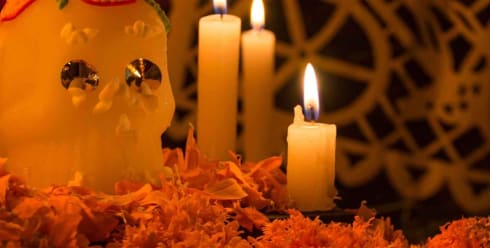
Day of the Dead is possibly the most colourful tribute to human mortality there is. Traditionally, 31 October is for cleaning graves. They are made to look fresh, and planks of wood are placed on top to represent doors. On 1 November, the festivities begin. Offerings are made to the dead, typically their favourite food and drink, while the ‘doors’ are opened so friends and family can speak with their loved ones. There is mourning but also smiles and laughter – the experience is life affirming and uplifting. To fully immerse ourselves in the celebrations, we visit cemeteries around San Cristóbal to see altars and tributes and explore markets and bakeries selling Day of the Dead essentials – a great chance to sample specialities only available at this time of year. We also visit the Chamulan village of Romerillo, where the Day of the Dead traditions haven’t changed in many years – providing us with a very authentic experience. Here, the cemetery is covered with huge blue wooden crosses decorated with chrysanthemums, which makes for a very colourful view.
Leaving around 5.30am with a breakfast box, we drive (4hr 15min) to Villahermosa, stopping for lunch at El Edén Restaurant. We arrive at our hotel early afternoon. Later, those who wish can visit the Roberto Barrios Waterfalls (around a 1hr 10min drive from our hotel). This series of cascades sits within the subtropical jungle of Chiapas and is known for its tiered falls and forest setting − an atmospheric counterpoint to the archaeological wonders waiting nearby.
We explore the Maya city of Palenque, set within dense jungle and renowned for the quality of its stone carvings and inscriptions. At its peak in the seventh century, Palenque was a powerful city-state, and its architecture remains among the finest in the Maya world. We then transfer to Campeche (6hr 20min), a fortified colonial city on the Gulf of Mexico. An orientation walk introduces the historic centre and its defensive walls, built to protect against pirate attacks.
After a 2hr 35min drive from Campeche is our second Maya site: Uxmal. Quite open, it contrasts the jungle ruins of Palenque we visited yesterday. This site, which dates to the Late Classic era (500 CE to 800 CE), features the Pyramid of the Magician; the Nunnery Quadrangle, which has long, elaborately carved facades; and a ball court, where a traditional ball game was played, sometimes ending in human sacrifice. Having worked up an appetite, we drive (20 minutes) to a Maya family restaurant in Muna. Here we eat pollo pibil and cochinita pibil (slowly cooked pork and chicken). The meat is roasted for about five hours with achiote paste and wrapped in banana leaves. After lunch, it’s about a 1hr 20min drive to Mérida, where several colonial buildings, including the cathedral, were built using stones from nearby Maya ruins. Arriving mid-afternoon, we have a walking tour of Mérida, returning later to enjoy the main square, which is particularly delightful at night.
Our first stop, after a 1hr 40min drive, is Izamal, a one-time Maya settlement now marked as a Pueblo Mágico (magic town) by the Mexican government. The town has yellow-and-white buildings and is known for the 16th-century Franciscan monastery built on top of a huge Maya pyramid. We then continue (1hr 10min) to Yokdzonot cenote, a natural swimming hole with vertical walls decorated with thick mangrove roots. From here, we transfer (25 minutes) to our hotel near Chichén Itzá, ready for our exploration tomorrow (total drive time: about 3hr 30min plus stops).
Our final day starts with a visit to Chichén Itzá. Having spent the night near the site, we can get in early before the day-trippers arrive from the beach resorts. Chichén Itzá served as the political and economic centre of the Maya civilisation and thrived from around 600 CE to 1200 CE. The pyramid of Kukulkan, the Temple of Chac Mool, the Hall of the Thousand Pillars and the Great Ball Court can still be seen today and demonstrate an extraordinary commitment to architecture, space and composition. The pyramid itself was the last, and possibly greatest, of all Maya pyramids. This afternoon, we drive about three hours to Cancún airport where the tour ends. Want more time in Cancun? Secure post-tour hotel nights through your sales representative. Please note: The group transfer back to Cancún is scheduled to align with a chosen flight; therefore, you should not book flights leaving before then. Please contact your sales representative for the timings of this flight.
Similar Experiences

Day of the Dead in Mexico City
6 Days from CAD $2,099
Mexico City: Day of the Dead Comfort
5 Days from CAD $1,526

Mexico City: Day of the Dead Original
5 Days from CAD $1,125

Discover Mexico - Day of the Dead (Oaxaca)
16 Days from CAD $6,299

Mexico City to Oaxaca: Celebrate Day of the Dead
8 Days from CAD $3,099

Oaxaca to Puerto Escondido: Day of the Dead
7 Days from CAD $1,349

Mayan Trail
11 Days from CAD $1,499
Tour Operator
Exodus Travel
It’s all about adventure That is what Exodus was founded upon 50 years ago, and what the company is still all about. Discovering countries, cultures, environments, cities, mountain ranges, deserts, coasts and jungles; exploring this amazing planet we all live on. At Exodus, we know what makes you tick when it comes to holidays. It’s a desire shared by so many others. A yearning to visit new places and come home with a real sense of what they’re all about. This means delving into local traditions, cultures, cuisine, lifestyles – anything that contributes to its unique identity. At the same time, we always remember that we are only guests. So we travel courteously and respectfully, in smaller groups to minimise our impact, to ensure that every Exodus holiday is a beneficial experience for everyone involved. This is a philosophy we take with us around the world, helping you reach some incredible destinations on 500 itineraries across over 90 separate countries. We also strive to provide as much flexibility and choice as we possibly can, making it simple for you to experience a very different holiday. Exodus started life on 4 February 1974 when two friends got together to provide an overland truck to travel to the Minaret of Jam, deep in the heart of the Hindu Kush, the most inaccessible of the world’s great monuments. See our history page for more details about how we began and how we have grown over the past 50 years. Never travelled with Exodus before? Visit our New to Exodus page for some useful, first-timer information.
In Business Since 1974
Download a personalized trip brochure!
Why book with us?

Best Rate Guarantee
Mytours.Travel makes sure you always have the best available rate

Best Selection
The best operators from around the world

Trusted Payments
Secure payments with Stripe

Expert Advice
Our expert agents will assist you in booking the perfect experience